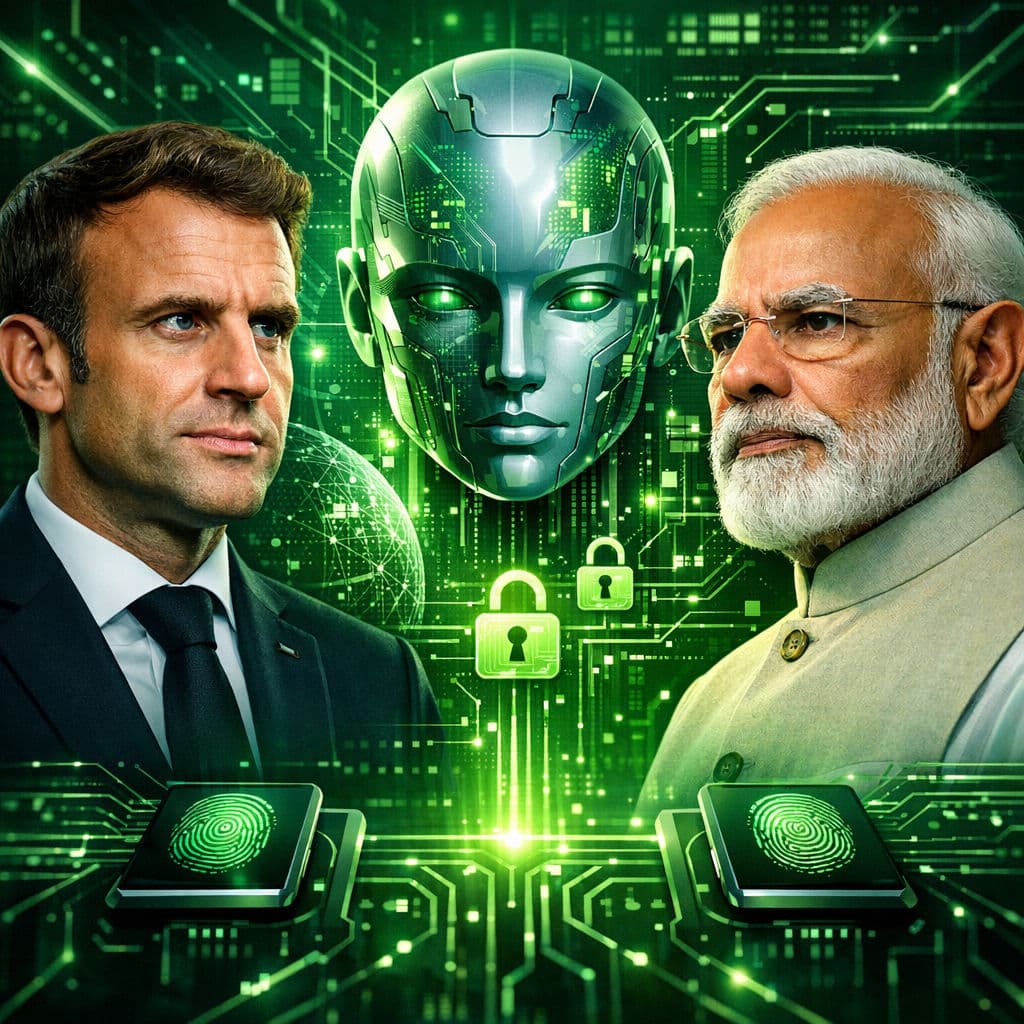
French President Emmanuel Macron and Indian Prime Minister Narendra Modi raised concerns at a Group of Seven summit about U.S. control over access to American artificial intelligence systems, according to the source article. The source also said an “Anthropic blackout” made that risk more tangible.
The source article, titled “World leaders want American AI. They just don’t want America to be able to turn it off,” said Macron and Modi warned that the United States could cut off access to American AI systems overnight. The supplied context does not include direct quotations from either leader beyond that characterization, and it does not provide a specific date for the summit.
This places the report within a broader debate about technological dependence and digital sovereignty, particularly as governments and institutions adopt AI systems developed by a small number of U.S.-based companies. Readers following related questions of regulation and platform control may also find context in our coverage of governance and market implications in Google AI Overviews litigation and in the Policy, Ethics & Law archive.
Source cited G7 discussion on dependence
According to the supplied notes, Macron and Modi raised the issue at a G7 summit. The source framed the concern as a risk that foreign governments, companies and institutions could become dependent on AI systems that are ultimately controlled outside their jurisdiction.
The supplied material does not specify whether the concern related to U.S. government action, company policy decisions, technical service interruptions, or a combination of those factors. It also does not include detailed policy proposals from France or India.
For reference on the G7 itself, readers can consult the official G7 website. On AI governance more broadly, the OECD AI Principles provide an established international policy framework.
“Anthropic blackout” referenced, but not defined in supplied context
The source article said an “Anthropic blackout” made the risk real. However, the supplied context does not define that event or provide details about its timing, duration, cause or scope.
Because those details are absent, the report cannot independently characterize the incident beyond noting that the source cited it. Readers looking for adjacent reporting on AI access controls may also see our post on reported White House export restrictions tied to Anthropic’s Mythos and China access concerns.
Anthropic’s official site is available at Anthropic, but no company response was included in the supplied source notes.
Limited business detail in provided material
The supplied context contains no disclosed venture funding amounts, merger activity, startup transactions or founder quotes. As a result, the business relevance here is strategic rather than transactional.
For companies building on third-party AI systems, the issue described by the source may relate to provider concentration and continuity of access. That makes this report relevant to the AI Business & Startups category, but the available material does not document any specific commercial response.
What is verified from the source notes
Based on the provided notes alone, the verified points are limited:
- Macron is identified as president of France.
- Modi is identified as prime minister of India.
- The source said both raised concerns at a G7 summit about U.S. control over access to American AI systems.
- The source said the United States could cut off access to those systems overnight.
- The source said an “Anthropic blackout” made that risk more concrete.
- No date, funding data, M&A information or founder commentary was provided in the supplied context.
Beyond those points, additional detail would require confirmation from the full source article or independent reporting.