
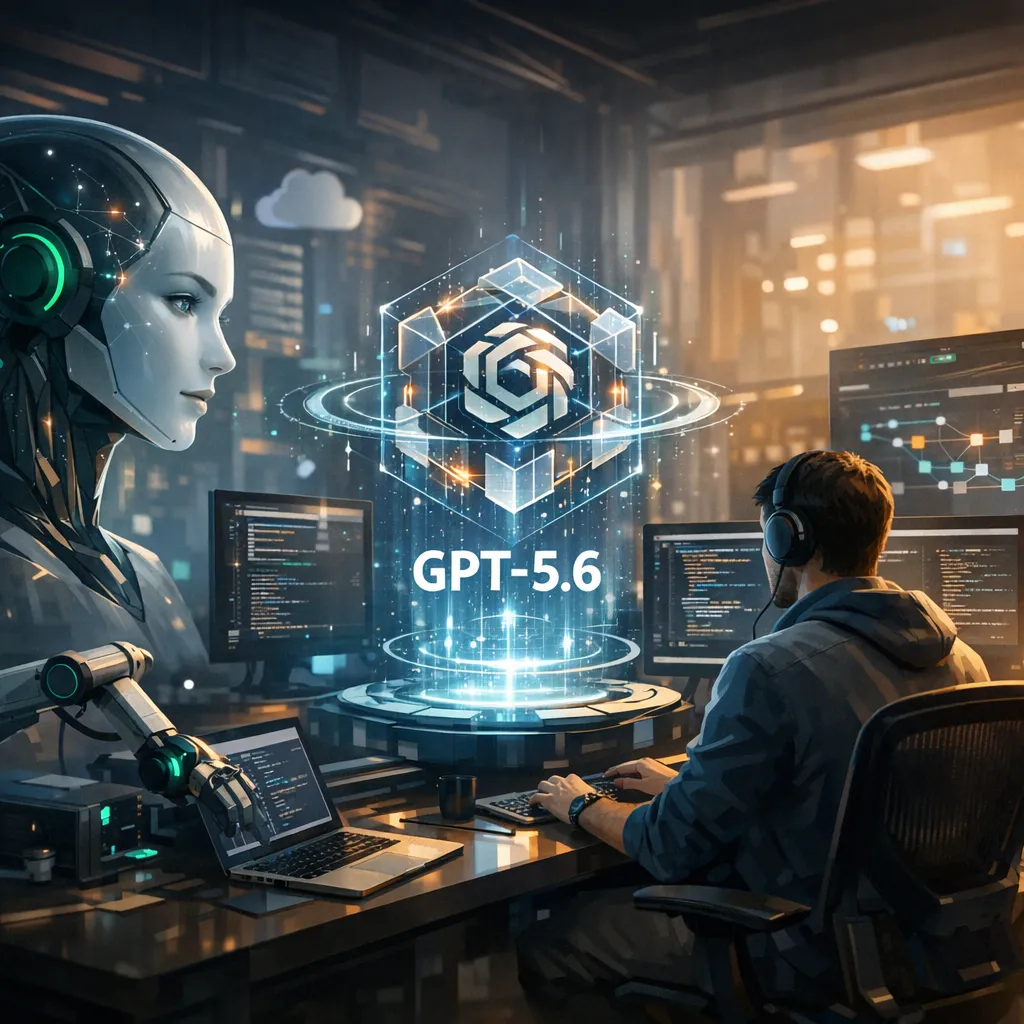
AWS has added OpenAI's GPT-5.6 model family to Kiro, its agentic coding service for spec-driven development and testing, according to Developer Tech News. The update brings three models—Sol, Terra, and Luna—into Kiro, giving development teams another option inside an AWS-managed workflow built around planning, execution, review, and validation.
At a product level, this is a Models announcement. At an operational level, it is more significant for buyers evaluating Developer Tools and AI Agents as governed parts of software delivery rather than chat-style coding add-ons.
AWS and OpenAI Expand Kiro's Model Options
Kiro is described by the source as an AWS agentic coding service that starts by converting product ideas and requirements into implementation plans instead of relying on an open-ended prompt. From there, the system carries out multi-step coding tasks using context from a team's codebase and engineering standards, while allowing developers to review and refine output at checkpoints before changes are applied.
AWS VP of Agentic AI Swami Sivasubramanian said the company wants to make the latest foundation models available to developers using Kiro for complex and long-running development tasks. OpenAI's Colleen Kapase, VP of Strategic Global Partnerships and Ecosystems, said the addition gives developers more flexibility to balance intelligence, speed, and cost across different stages of work, according to the same report.
The source also says AWS and OpenAI have optimized the Kiro environment for the OpenAI models it now runs. That matters because model performance in production increasingly depends on runtime integration, workflow grounding, and orchestration quality, not only on the base model itself.
Why Kiro's Workflow Design Matters More Than the Model List
Specification-first development
The strongest differentiator in the report is not the GPT-5.6 branding. It is Kiro's workflow design. By starting with requirements and implementation plans, Kiro is aimed at reducing the ambiguity that often weakens prompt-centric coding tools. For enterprises, that may lower adoption friction among teams that need reproducible engineering processes.
Review gates and property-based testing
The source says Kiro places a manual review gate before implementation and then checks correctness after implementation using property-based testing, which verifies behavior against defined properties rather than a fixed list of examples. That makes Kiro look less like a coding copilot and more like a managed software delivery layer with embedded controls.
For platform engineering leaders and software governance teams, that framing is important. It suggests AWS is trying to make agentic development acceptable inside production processes where auditability, consistency, and validation matter as much as code generation speed. That also puts the announcement squarely in the broader Enterprise AI conversation.
Why This Matters to Technology decision-makers
For CIOs, CTOs, and VP-level engineering leaders, the key question is not whether Kiro now supports another frontier model family. It is whether a managed agentic workflow can consolidate planning, coding, review, and testing in a way that reduces engineering overhead without weakening control.
There are several implications:
- Workflow economics may outweigh token economics. The source emphasizes fewer iterations, richer context, review checkpoints, and automated correctness checks. Those factors can affect developer throughput and QA effort more than list-price model access alone.
- Benchmark claims need caution. Developer Tech News reports that, on Terminal-Bench 2.1, GPT-5.6 Terra completed successful tasks in Kiro at roughly an 82% cost reduction. That figure is attributed to AWS and OpenAI and should be treated as a benchmark claim, not independently verified evidence of enterprise savings.
- Governance becomes part of tooling selection. Any service that draws on internal codebases and engineering standards raises practical questions about data handling, model routing, IP exposure, and approval accountability.
- Platform strategy is shifting. AWS supporting OpenAI models inside Kiro indicates that competitive differentiation may increasingly sit in orchestration and controls, not just proprietary model supply.
Market Signal: Agentic Coding Moves Up the Stack
This update also points to a broader market shift. Standalone coding assistants that mainly compete on chat-based generation may face pressure from platforms that combine planning, execution, testing, and human approval in one environment. If that model gains traction, competing vendors will need to prove not just model quality but operational fit across the full software lifecycle.
For buyers, the practical takeaway is to evaluate agentic coding systems on four layers: model choice, workflow controls, validation methods, and governance posture. The GPT-5.6 addition matters, but the larger story is that AWS is packaging model access inside a structured engineering process.
Sources and Methodology
This article is a single-source analysis based on reporting from Developer Tech News, published on August 25, 2026. All factual claims were limited to the provided source material. Analytical conclusions, including workflow, governance, and market implications, are clearly identified as interpretations derived from that reporting. Vendor benchmark figures were treated as attributed claims rather than independently verified results.